Pangea Melody
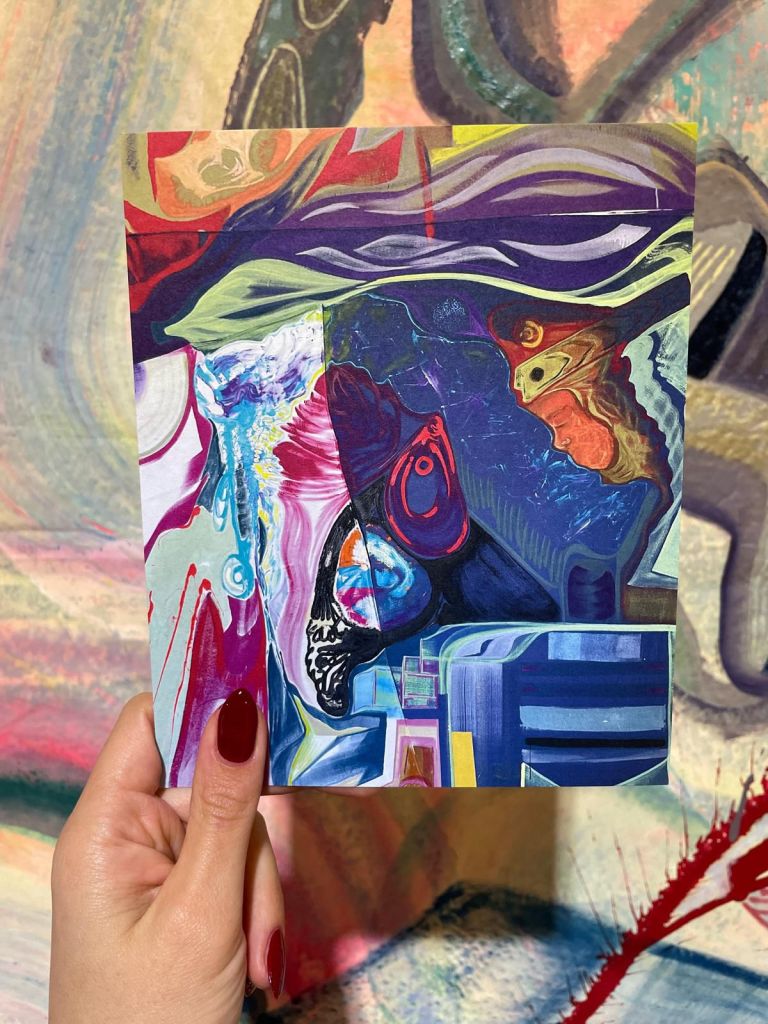
Brochure for artist Uğur Ulusoy’s solo exhibition Leaving Peacefully
We passed through different climates, lands, and continents. We drew meaning from the clouds, emotion from words. At times, we learned to feed ourselves in similar ways, at others in vastly different ways. We felt cold, stayed in darkness, found fire. We learned to cook raw food. Our desire to connect gave rise to sounds and symbols. Our first homes were caves. Instead of merely living and leaving, we chose to leave a trace: “We were here,” we said, and placed our hands on cave walls. In South America, Central Asia, the Altai Mountains, Tibet, India, Indonesia, Algeria, France, Spain…
Cueva de los Manos.
On different lands, we felt the same emotions and left similar traces. Over time, our habits changed, our appearances transformed. We discovered our bodies, we discovered each other. With every new thing that touched our waters, the color of our waters changed. Cutters turned into knives, knives into swords, swords into weapons, weapons into explosives. We didn’t settle for simply loving to fly; we learned to shoot in the skies. While marveling at the iron hulks drifting in the heavens above us, we turned them into machines of death. We altered the scent of nature.
Yet how beautiful it is to sleep in the embrace of peace! To lie under the free sun of conscience… Uncover peace from beneath the rocks where it is buried! It loves neither blood nor strife… Peace nourishes the wheat; the fruit of the land where it roams tastes sweeter. Turn your gaze inward, cleanse your hearts. Do not tear peace to shreds. Do not hide love in the depths of a chest; it neither fades nor wears out. Emotions continue to fertilize one another. Peace gives birth to tranquility, tranquility to happiness, happiness to the joy of life.
A tale from tales, a dream from dreams, I think.
Yet I am at the heart of a truth.
Ahenk / Serenity
The earthly paradise was created for unity; as the continents drifted apart, one did not destroy the other.
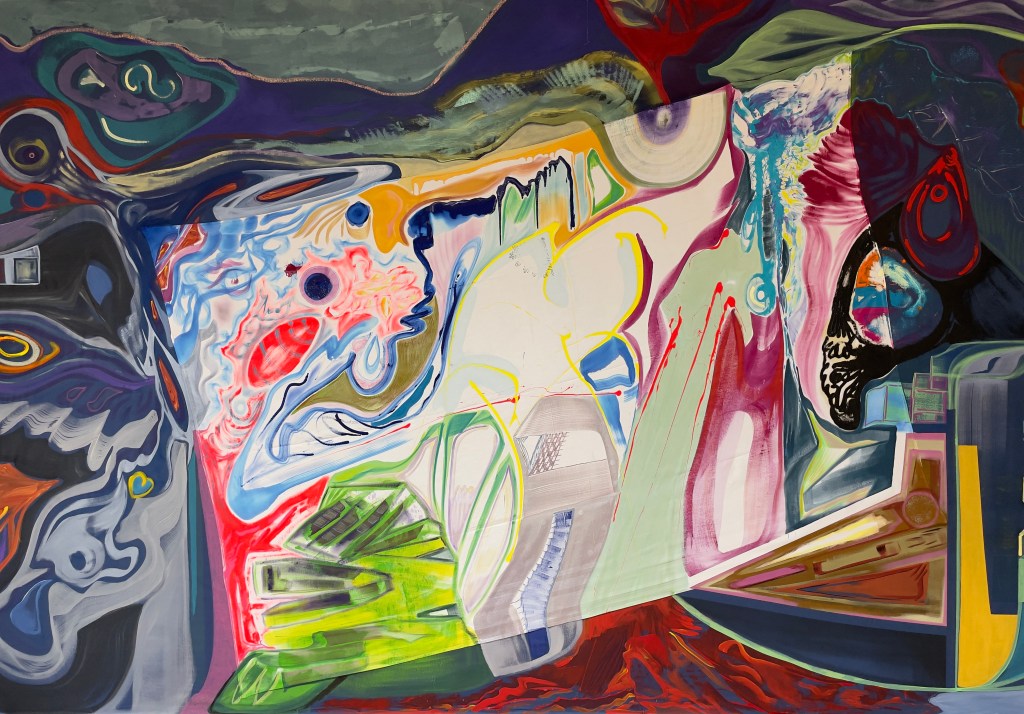
There once was a realm where everything came together in harmony. The fabrics of different dimensions and colors wove their stories together by touching one another. Colors, figures, and abstract images were bound together at the seams of the fabrics, transforming into each mind’s unique tale. Just like the union of two different people, or the minorities living within a larger society… Different cultures, languages, sounds, and instruments came together, dancing in harmony. Diversity revealed itself but did not shout; it presented its existence with grace. The beauty of being together was evident in every detail.
Veday-ı Muhabbet / Farewell of Love
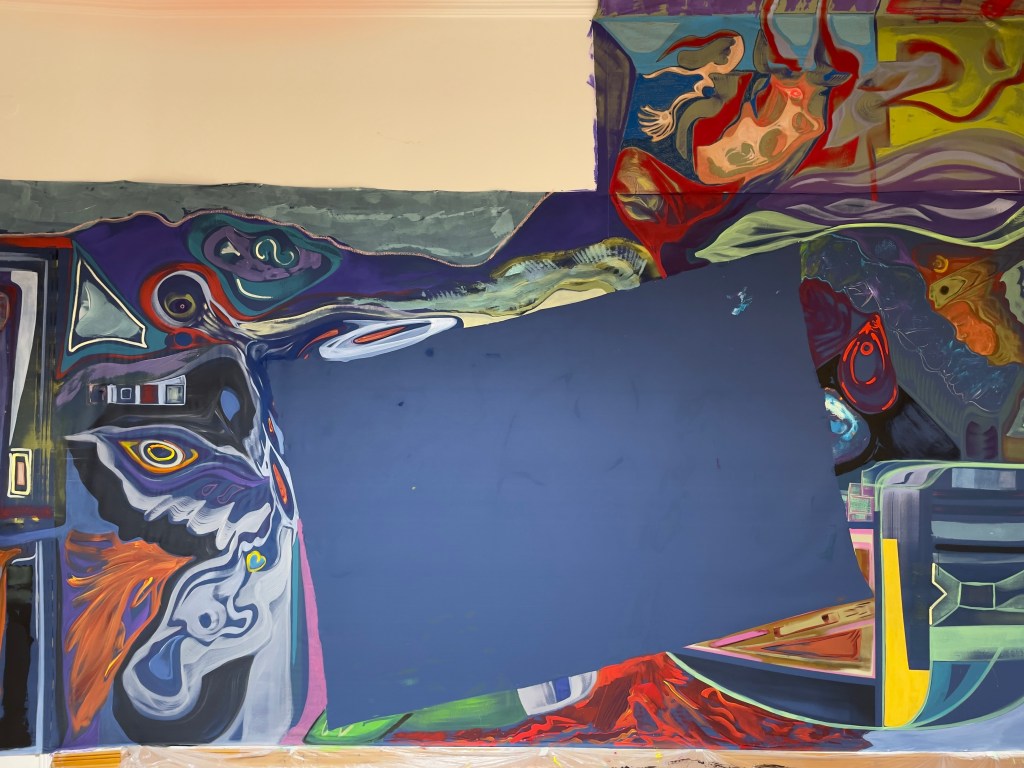
The magma was hot. And one day, the continents drifted apart. The seas, rivers, and oceans continued their flow in between.
In time, the traces left by the white fabric that had been part of the whole were examined. Undamaged, only the marks where it was connected remained. It was a sad but silent farewell. It was as if a saz, once played in unison, now continued softly, only on its stage. Watching from across, it observed what its traces and the void left behind would transform into.
The magma was still hot. Faults continued their movement, and the Earth’s crust settled anew. Yet the universe did not collapse; it did not threaten itself. The continents were rearranging themselves in small steps.
It was a parting where even as they separated, the intermingled lands continued to touch each other through oceans, rivers, and seas. Two continents, two countries, two societies, two cultures, two voices, two colors… No, even more. Like two beings who could bask in the infinite sun of togetherness yet preserve their distinct colors and share that common sun from separate places.
History is cyclical.
Lines are drawn, sharpened, multiplied, lengthened.
Separations are inevitable, and separations are also cyclical.
Traces change; the mark of the line destroys.
But peace eliminates all lines.
Fabrics carry stories and journeys into the present. Like different perspectives altering the interpretation of a painting, each new gaze grants a renewed meaning. A person finds their traces within another world. The boundlessness of colors and the harmony of differences remind us that cultures cannot be confined by lines. Paintings too vast for a canvas symbolize the world within a person and the person within the world. For every human carries not only the tradition of their birthplace but also the boundless expanse of the Earth.
“Leaving Peacefully” emerges from such a perception of the world, where all Shibboleths (dividing boundaries) vanish. Our skulls differ, our heights differ, our colors differ, our languages differ. But are not the songs we sing, the poems we recite, the emotions we feel the same? Do our emotions not multiply with one another?
From Euripides to Nazım, from Hesiod to Neruda, from Valmiki to Gandhi… Poets, writers, and artists of different eras… People of different lands… Emotions are cyclical. Instead of confining their existence with lines, humans can choose to partake in the world’s dance, sustaining peace this way.
With “Leaving Peacefully,” Uğur Ulusoy expresses a poetry akin to the legacy left by poets from antiquity to the present day. This multi-layered, colorful world brings forth a union of continents, lands, colors, and emotions. Figures and lines on fabrics not only take shape but also begin to speak the language of peace. Like the following and uniting yet individually distinct colors, it portrays a world where everything contrasting can coexist harmoniously, just as in life.
Ulusoy’s paintings showcase the transformation of abstract emotions, dreams, peace, and serenity into tangible forms. Like life, they continue to grow with the peace he chooses anew every morning.
With “Leaving Peacefully,” we trace peace without losing our color, basking under the “infinite sun” together.
 leyladan